
Can AI be used safely with company data?
Yes, if the task, data sources, rights, logs, and approvals are clarified before productive use. A digital employee does not receive blanket company access.
Security
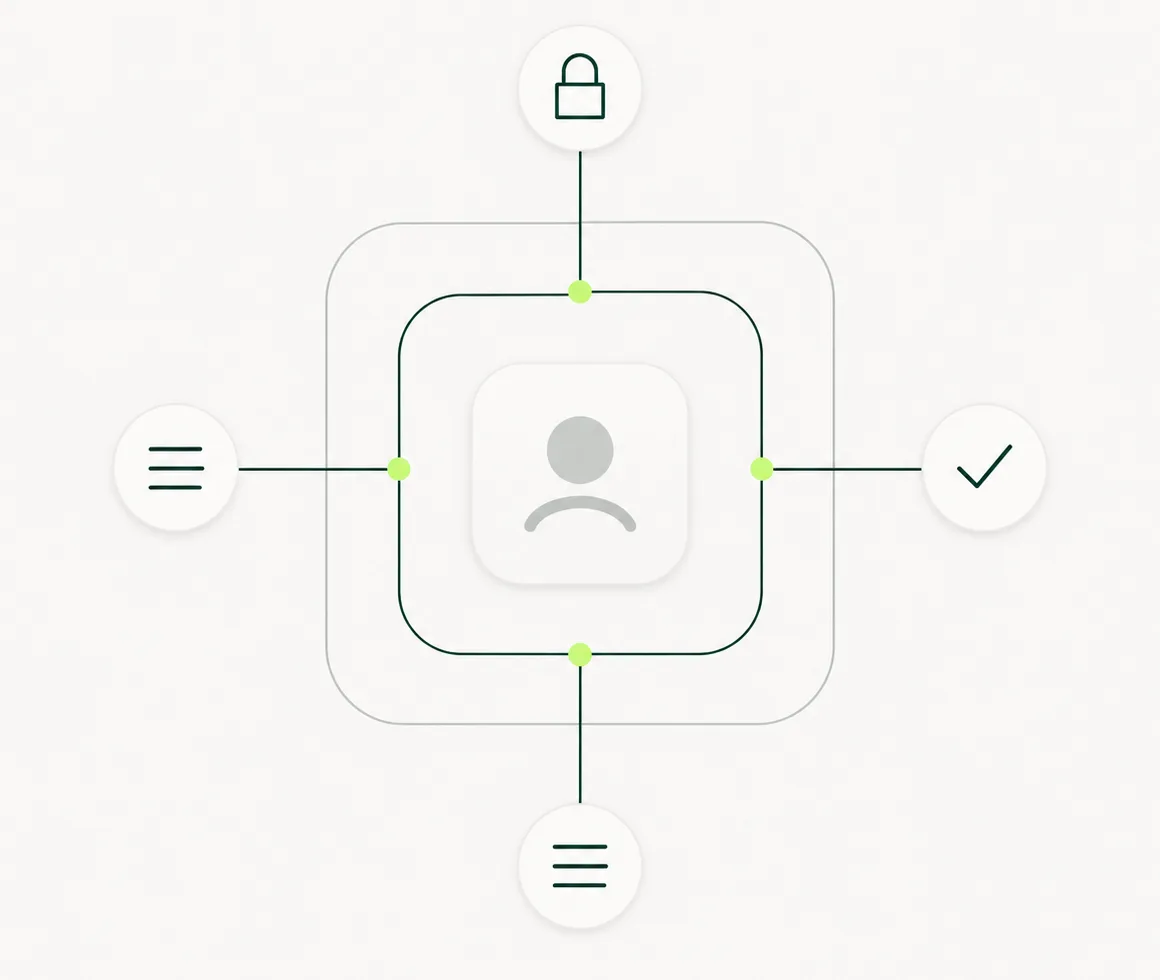
A digital employee works with real data and real systems. That is why data protection, the EU AI Act, and security are clarified early: task, data flows, rights, logs, and the points where a human decides.
Why it's different
It reads documents, checks data, looks for context, prepares answers, or creates records in systems. That raises data protection, security, and regulatory questions, including GDPR and the EU AI Act. These points need to be clarified before the pilot.
Short answer
AI and data protection need architecture, auditing and clear boundaries.
thirdmind plans digital employees as controlled AI systems. Each one gets a clear task, limited system access, defined rights, logging, and escalation rules. The backend and deployed LLMs are hosted in the EU, and customer data is not used to train third-party LLMs. Our basic architecture was reviewed by DORDA, our legal partner. For project-specific GDPR or EU AI Act questions, we involve DORDA where needed.
Yes, if the task, data sources, rights, logs, and approvals are clarified before productive use. A digital employee does not receive blanket company access.
We design the setup so data protection is clarified before productive use: purpose, data, roles, rights, logs, approvals, and responsibility. The specific classification depends on the process.
Yes. In the project, we examine which role, risk classification and transparency obligations may be relevant for the specific AI system. We clarify open points with DORDA.
Limited rights, human-in-the-loop, escalation rules and audit logs. Critical steps are prepared or handed over to people instead of going through automatically.
Seven principles
A digital employee does not receive general company access. It gets a task: check invoices, prepare tickets, compare master data. Everything else remains outside the scope.
Rights are defined for each digital employee: read, write, and approval rights, system limits, data types, and escalation points. The goal is limited agency, not blanket autonomy.
People stay in the process where responsibility lies. If a case is uncertain, outside the rules, or needs a decision, it is referred.
Logs show which case was processed, which data was used, which decision was prepared and when it was handed over to a human.
The backend and deployed LLMs are hosted in the EU. Customer data is not used to train third-party LLMs. For data protection or EU AI Act questions, we provide project-related legal coordination.
A digital employee can prepare actions or carry them out within clear limits. The rights it receives depend on the process, risk, and approval model.
Not every company works only in cloud systems. Digital employees can also be planned for environments where databases or specialist systems are on-premise.
Before the pilot
Our attitude
No blanket guarantee. But clear responsibility.
We do not treat GDPR as a blanket seal because every setup depends on purpose, data, roles, and process. What we do: plan security as architecture, document boundaries and responsibilities, and obtain project-related legal advice on GDPR or EU AI Act questions where needed.
Legally tested basic architecture as a starting point.
Project-related clarification on GDPR and EU AI Act questions.
Technical limits, logs and human approvals in the setup.
Frequently asked questions
AI fits into company processes when tasks, data sources, rights, logs, and approvals are clearly limited. thirdmind plans digital employees with EU hosting, limited data flows, traceable processing, and a view of GDPR and EU AI Act questions.
Data protection depends on the specific setup. thirdmind works with EU hosting, limited data flows, roles, rights, logging, and a basic architecture reviewed by DORDA. If GDPR or EU AI Act questions become relevant in the project, we involve DORDA on a project-specific basis.
Yes. In the project, we examine which role, risk classification, and transparency obligations may be relevant for the specific AI system. The classification depends on the concrete application; where needed, we clarify open points with DORDA.
Not for training third-party LLMs. Project-specific customer data can be used as context, a knowledge base, or test material, but not for provider training.
Backend and deployed LLMs are hosted in the EU. The specific architecture is determined in the project.
Yes, but not automatically. Write permissions depend on the process, risk, and approval rules. It often makes sense to prepare actions first and have people approve them.
Through clear scope, verified data sources, limited rights, escalation rules, human-in-the-loop, and logs. No single mechanism is sufficient on its own.
Responsibility remains clearly assigned inside the company. That is why every digital employee needs a business owner, defined boundaries, and understandable handovers.
Yes, such setups are possible. We check in advance which connection makes sense, which data the digital employee really needs, and how the setup can be secured.
Discuss safety
Yuno asks four short questions and helps determine the appropriate next step: process review, pilot, or security discussion.